Showing posts with label TOP TEN. Show all posts

Friday, September 21, 2007

TOP TEN :: Best Comics Artists Ever :: #1 :: Jack Kirby


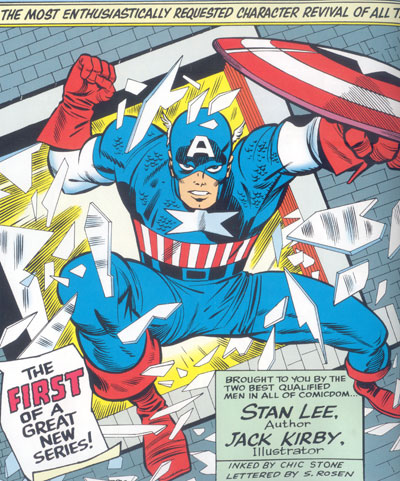
Here walked a giant. Besides being one of the great idea men, one of the great innovators (romance comics, kid gang comics, the first direct only sales success, and especially the co-creator of the Marvel universe) Jack Kirby always provided the WOW factor. Look at any comic art today--you see influences of Neal Adams, the Image group, even Milt Caniff, but the guys who made the single and two page spreads his own was Jack Kirby.

Pick up any Marvel Masterworks or Fourth World Omnibus--the art explodes off the page--you stare with gape-jawed awe. Your eye lingers and--back in the day--you had to buy the book.

In the same way Hemingway stated that all American literature derives from one source, Huckleberry Finn, all modern comics derive from what Jack Kirby wrought over his fifty-odd creative years. A lot has been written about Kirby, but here is the simplest way to sum it up. If it weren't for Kirby's explosion of creativity in the sixties, I doubt we would all be here today praising comic books.

TOP TEN :: Best Ever Comics Artists :: #2 :: Steve Ditko


Most people who know me know that I'm a big Spidey fan. And while I'm also a big fan of Stan Lee, John Romita, and Jack Kirby, there's only one man that could have made Spider-Man work if you ask me: Steve Ditko. Spider-Man stood out right away in the Marvel universe, because he was so different than all the other characters--he was this nerdy teenager who dressed up in a weird spider costume and fought crime, meanwhile juggling school, girls, and all the other pressures teenagers face. I love Jack Kirby--some stories suggest that Jack Kirby had a lot to do with the initial idea of a "spider man"--but can you imagine Kirby doing a book like that? Steve Ditko brought the kind of energy and imagination to Spider-Man that only he could, not only in the look of Spider-Man, but often in the plotting of the book, and many people say, most of the creation of the character. Only Steve Ditko could make something as crazy sounding as "a teenage crimefighter with the proportionate strength of a spider" not only work, but become an overnight sensation. Steve Ditko only did 38 issues of what many consider the greatest comic ever, but he's still hailed as one of the greatest comics artists of all time to this very day.

Thursday, September 20, 2007

TOP TEN :: Best Comics Artists Ever :: #3 :: John Romita, Sr.


While Jack Kirby set the style for all modern comics, it was John Romita who established the look. He also had the unenviable position of following the greats of the comics industry: Kirby on Captain America and Fantastic Four, Steve Ditko on Spider-Man, and Wally Wood on Daredevil. I’ve heard many an old school fan decry Romita’s arrival on Amazing Spider-Man, with the seminal issue 39, as the end of the character. How could a romance artist, with the glossy and clean linework, replace a master of oddity and mood! This was quickly replaced with astonishment.

John Romita’s work, influenced by the great Milton Caniff, quickly won over legions of fans, making Spidey the preeminent Marvel superhero. He followed his run as penciler for Spider-Man as the embellisher on Gil Kane’s pencils, perhaps the greatest mesh of graphite and India ink ever produced. He established the popular look of Marvel’s characters in Spider-Man’s daily newspaper strip, and in almost all of their licensed material. Later, as Marvel’s art director, he guided the next generation of artists and continued Marvel’s incomparable “house style”. His hand is seen everywhere on covers from the ‘60’s to the ‘80’s, often offering the subtle changes that move a cover from good to great. John Romita is one of the most influential pencilers, and arguably the greatest inker, that comics has ever seen.

TOP TEN :: Best Comics Artists Ever :: #4 :: Paul Pope

Paul Pope could best be described as the “rock star” of comics, at least that’s how I describe him. He most well known for his indy titles THB, Heavy Liquid and 100% and recently for Batman: Year 100, which was a more mainstream endeavor.

He fuses Eastern and Western influences into a style that is distinctively his own. His work is gritty and surreal often depicting a futuristic dystopia. The worlds he creates are both scary and beautiful. I love to travel along with the characters to see where the ride will take me. Usually it is a bumpy ride fraught with danger and excitement. Merely describing his work as “action-packed” would be selling it short: it does have a highly intellectual side. A discussion about Paul Pope’s work quickly turns into a conversation about philosophy and politics.

I highly recommend his art book Pulphope. It’s chock full of Popey goodness--he shows a wide range of his works. It even includes a few childhood drawings. Also, it includes essays written by Pope which provide insight into his work. But it is a little on the adult side. Let’s just say he likes to draw the ladies.

Wednesday, September 19, 2007

TOP TEN :: Best Comics Artists Ever :: #5 :: Bryan Hitch


In my book, Bryan Hitch is the "Ultimate" comic book artist and story teller (sorry, couldn’t resist). I first experienced Hitch’s work on The Authority with Warren Ellis. Seeing this book was one of those seminal moments where you have experienced something new and amazing. Comics, for me, would never be experienced the same. Hitch is the king of wide-screen comics, like a Michael Bay movie on the page: the detail on a Hitch page is easily comparable to a 1080i high definition TV. There is not an angle or point-of-view that is out of range for Hitch’s pencil; the POV he employs draws you directly into the page. You can feel the action on the page surround you as action movie would in an Omnimax theater. Hitch’s pin-up comic book covers feature characters looking you directly in the eye and inviting you to “join in on the fun."

Bryan Hitch became a super star with his recently completed work on Marvel’s The Ultimates with Mark Millar and is currently hard at work bringing the fantastic back to Marvel’s First Family, the Fantastic Four. You can also find Bryan Hitch at the video store with character designs being used for The Ultimates and The Ultimates 2 movies.

TOP TEN :: Best Comics Artists Ever :: #6 :: Will Eisner


What can I say about Will Eisner that hasn't already been said by people with college degrees? I'll say one thing--it's pretty shocking that he's this low on the list--this is by no means my only disagreement with what our staff's voting came up with, but I guess that's the nature of the beast. If Jack Kirby represents the creative spirit and fever of American comics, then Will Eisner is surely the brain, the science, the technique. People forget that The Spirit was cranking away in the 40's, with some of the most gorgeous page layouts ever in comics, back when most mainstream comics characters were drawn roughly and crudely. By the time Kirby and Stan Lee created Fantastic Four in 1961, The Spirit was already 20 years old!

You can't understate Jack Kirby's relentlessly creative output, and the incredible brute energy of his art. But for innovation, it's Will Eisner all the way; who besides his more famous achievements--including being credited with the creation of the graphic novel--took comics from the Siegel and Shuster adapted newspaper strip style, and developed them into a language and rhythm altogether unique. His storytelling remains peerless even today; besides his enormous influence over nearly every branch of comics, he's directly inspired many of the graphic novelists and autobiographical cartoonists of the last 30 years. For my money, there may be no more influential cartoonist in the history of the medium--and unlike many of his contemporaries, Will Eisner was not only an incredible draftsman and idea man, but a storyteller first and foremost, a necessity for good comics that is often forgotten.

Tuesday, September 18, 2007

TOP TEN :: Best Comics Artist Ever :: #7 :: John Buscema


Penciler John Buscema is best known for his work on Silver Surfer, The Avengers and Conan. But he also worked on Spider-Man, Fantastic Four, and nearly every other Marvel title you can think of. His covers are iconic, especially Silver Surfer #4 where Surfer and Thor are engaged in battle.

After Jack Kirby left Marvel in the 70s Buscema helped to fill the void. He also helped to standardize the way Marvel characters were drawn. He wrote the book on it. Literally. In 1977 Stan Lee and Buscema wrote How To Draw Comics The Marvel Way.

His work is all about epic poses and dynamic compositions. I love the tension and the action in his work. But I think what I love most about Buscema is the way he would draw women. They were glamorous with their big eyes, flowing hair and long legs. I have a secret longing to look like the vixens from the Silver Age of comics. Perhaps one day… (when I grow another 8 inches or so).

TOP TEN :: Best Comics Artists Ever :: #8 :: Frank Quitely


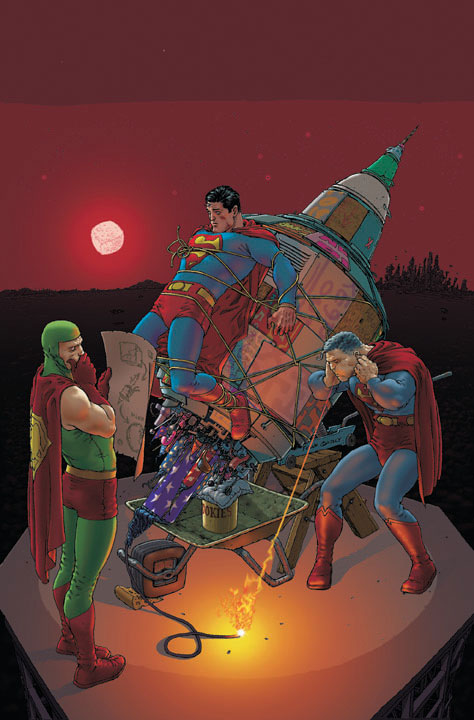
While Frank Quitely’s highly stylized pencils divide the majority of comic book readers into one of two camps—love or loathing—it’s difficult to deny his talent as a storyteller. Best known for his collaborations with writer Grant Morrison, he has a talent for using subtle facial expression and body language to reveal a level of character that is scarce in mainstream comics these days. But he’s no slouch in the over-the-top-comic-book-melodrama department either. To get a true taste of everything he’s capable of, check out We3, a near perfect comic series in my humble opinion. If you don’t love Bandit by the end of the first issue, well . . . I don’t know what to tell you.

Required reading: New X-Men, All Star Superman, JLA: Earth 2, We3

Monday, September 17, 2007

TOP TEN :: Best Comics Artists Ever :: #9 :: Osamu Tezuka


If you were to combine Carl Barks, Harvey Kurtzman, Jack Kirby and Frank Miller together into a single American artist, this amalgam would still fall far short from the influence this one man has had in the history of manga. Osamu Tezuka (1928-1989) was best known in this country for creating Astro Boy and Kimba the White Lion. With the explosion of manga, American audiences have gotten a healthy taste of Tezuka's work, offered in a dizzying array of genres and styles: Buddha: Tezuka--an Asian Christian--tells the life story of Siddhartha; Adolph: a five part novel dealing with Japan and Germany during WWII, and a fantasy told in realistic and brutal manner; and Phoenix: Tezuka's unfinished masterpiece, a series of time spanning morality plays combining Asian folk tales and science fiction. With over 10,000 pages already translated into English, we still have over 150,000 pages left that we can look forward to. As the works continue to be translated, watch as Tezuka's influence in THIS country grows. I would bet is that 10 years from now, Tezuka will be much higher on the list than 9.

TOP TEN :: Best Ever Comics Artists :: #10 :: John Cassaday


I first noticed John Cassaday’s art on Captain America back in 2002. Relaunched in the wake of the Sept. 11, 2001, terrorist attacks, Cassaday’s realistic art really captured the feel of a Cap who was more down to earth, tackling terrorist threats instead of Batroc the Leaper. Not to mention he introduced the “chunky chain-mail” look for Cap that all artists who followed him have used. I’ve since gone back and marveled over his work on Planetary and am continually amazed by his art on Astonishing X-Men. It’s nearly impossible to imagine anyone else on those titles.

What Cassaday does so well is blend his gritty, realistic style with the high-octane, widescreen action his collaborators like Warren Ellis and Joss Whedon call for. Oh, but that’s not all! I’m always impressed by how he captures smaller moments as well. One of the greatest moments from Astonishing X-Men is the return of Colossus–-but what really drives the moment home is not the splash page revealing the revived hero (although don’t get me wrong…that page is pretty freakin’ sweet), it’s the following pages, focusing on Kitty Pryde’s shock as the action continues around her, and the haunted look on Colossus’ face as he asks if he’s "finally dead."

I feel like I’ve barely hit the tip of the iceberg on John Cassaday’s talent, but I’ve rambled on enough. But this young fella’s got plenty of good years ahead of him, so I’m sure we’ll continue to see him grow and excel as an artist. And did I mention that he’s a heckuva nice guy? And I hear the ladies find him to be quite pretty, but I’ll let you all judge that for yourselves.

More info on John Cassaday is available at http://www.johncassaday.com/

TOP TEN :: Best Comics Artists Of All Time, Ever!

As promised, we're back with another series of highly controversial decisions, this time on the Heroesonline bloggers' choices for Top Ten Best Comics Artists. We polled each employee for his top ten, tabulated the results, and the ten we will be profiling this week were the tops! On Friday, after the top spot is announced, I'll post the top 25 or so, just to show all the ties, and the many many that were left out. Todd especially would like everyone to know that he is outraged that Mike Mignola didn't make it on the list. There's one in every bunch, folks--so without further ado...

Friday, August 31, 2007

TOP TEN :: Top Ten Single Issues Ever :: #1


Superman: Whatever Happened To The Man Of Tomorrow?
(Action Comics #583 and Superman #423)
by Alan Moore, Kurt Schaffenberger and Curt SwanWho better to encapsulate fifty years of Superman continuity into two issues than Alan Moore, Curt Swan, and Kurt Schaffenberger? At once a love letter and Dear John letter, "Whatever Happened to the Man of Tomorrow" closes the door on a particularly broad slice of twentieth century American Myth. While this version of the Silver Age Superman's ride into the sunset is not considered to be canonical, it still serves as an important record of a very important and specific time in the history of comics: when old school story sensibilities were beginning to give way to new modes of story telling in the late eighties. This push and pull between the old and the new is well represented here in the push and pull of Schaffenberger’s and Swan’s bright, optimistic art styles, with Moore’s contemporary and consequence-laden—some might argue cynical—narrative.

One of Alan Moore’s greatest strengths as a writer was and is his ability to imbue his characters (or those owned by powerful, multi-media conglomerates) an impeccable degree of humanity, which is made all the more remarkable when juxtaposed against a backdrop of goofy, comic book improbabilities. And while, in this story—a silver age tale at heart—he only began to scratch the surface of what was possible in regards to that particular notion, the comic book world would, only weeks later, give itself a collective smack on the forehead when Watchmen #1 hit the stands.

TOP TEN :: Top Ten Single Issues Ever :: #2


Batman #404
by Frank Miller and David Mazzucchelli

What can you say about Batman Year One that hasn't already been said ten thousand times by two thousand people? Frank Miller gets pinned with the whole "dark and gritty" thing, but this is the kind of book Batman always should have been. No Robin. No ridiculous arch-villains. Just a slightly crazy dude in a bat suit, and a mostly honest cop, who take on a city packed to the gills with corruption, graft, and bad cops. In Batman #404, the story begins, masterfully following the arc of a young Bruce Wayne and Jim Gordon embarking on their two separate careers. Frank Miller not only tells a great crime/adventure story, but a human one, painting an extraordinarily well-conceived portrait these two men and the things that motivate them to stand alone against so many.

While David Mazzucchelli seems to have left comics forever, this is the story that stands as one of the most perfect unions of writer and artist ever in comics. For someone with such a small body of comics work, Mazzucchelli seems born to draw comics, effortlessly playing with time, rhythm, lighting, and the many visual tools of the cartoonist to somehow make these characters seem larger than life, and at the same time somehow frail, fallible, and mortal. For me this will always stand as the greatest comic ever--while Frank Miller swings and misses sometime, when he hits it's always out of the ballpark. All the others--Dark Knight Returns, Watchmen, etc.--sit at the kids' table whenever Batman Year One comes to dinner.

Thursday, August 30, 2007

TOP TEN :: Top Ten Single Issues Ever :: #3


Amazing Fantasy #15
by Stan Lee & Steve Ditko

It takes the front half of a cancelled comic to introduce the most important superhero since Superman. While it is said that the first and last stories are the easiest to write, Stan Lee and Steve Ditko’s Spider-Man is the textbook example of secret origin perfection. Everything you need to know about the character is packed into 11 scant pages, and is so perfect that it has remained virtually unchanged for over 40 years. Compare this to recent attempts to reinvent the character for modern times, which took ten times the page count. Amazing Fantasy #15 is modern day mythology, a model parable about power and responsibility, and has rightfully been declared the superhero classic of its time, if not all time.

Wednesday, August 29, 2007

TOP TEN :: Top Ten Single Issues Ever :: #4


All-Star Superman #1
by Grant Morrison and Frank Quitely

This comic is the essence of everything that Superman and his world is about, done in 22 pages. And if it’s not the best Superman comic ever than it's darn close.

The issue starts with the most concise retelling of Superman’s origin ever. After that we dive headlong into the middle of Superman’s most recent adventure. A team of scientists mapping the surface of the sun have fallen prey to sabotage at the hands of Lex Luthor, and there’s only one person who can save them. But this time saving the day comes at a fatal price and now there’s only one thing Superman can do.

Grant Morrison writes every character absolutely perfect. Superman has a quiet dignity, Lois is a motor mouth, Jimmy is relentlessly positive, Luthor delights in his own evil machinations and Clark is clumsy in the best Christopher Reeve way. Frank Quitely’s art is incredible. Recommended to anyone as their first Superman comic.

TOP TEN :: Top Ten Single Issues Ever :: #5


Sandman #8, "The Sound of Her Wings"
by Neil Gaiman, Mike Dringenberg, and Malcolm Jones III

August, 1989....My mother had just passed a away 4 months earlier. I was a young man getting on with life but still reeling from the experience when Sandman #8 appeared in my new releases box one pleasant Saturday afternoon. All of fandom was searching for the next Alan Moore to arrive in the comics mainstream--another intellectual British comics writer who was going to turn the comic world upside down once again. Neil Gaiman partially succeeded with the first Sandman story arc, but it was the 8th issue and the introduction of Dream's sister Death that left us all in gape-mouthed awe.

The story: Dream is pouting because of the events that took place in the first 7 issues and he meets with his big sister in Greenwich Village. They sit and talk and continue the conversation as Dream follows Death while she goes about her business; managing/witnessing every human death. She is presented as a sympathetic, hip, stylish and pale punk/goth girl in her early 20s. Now through popularity and imitation the 'adorable' Death has turned into a cliché; however in 18-odd years ago and in Gaiman's competent hands the image was new and a blinding stroke of genius. With this single inventive story, the tapestry for the Sandman universe exploded with possibility, a new British writer had ascended the superstar throne; and most importantly to me, Death suddenly didn't seem so bad and I felt comfort that my mom wasn't alone after she had left us.

TOP TEN :: Top Ten Single Issues Ever :: #6


Doom Patrol #34, "The Soul of a New Machine"
by Grant Morrison and Richard Case

Doom Patrol #34 is the kind of comic that you sort of tell all your friends they have to read but have no way of describing it without coming across like you are insane. This is early Grant Morrison writing at its loopy, post-modern finest and Richard Case's art grounds this story as much as it plays up the lunacy of everything. Describing the contents of this book to others will only succeed in making you sound like a lunatic. For example, the following happens: two brains fight to the death. Gorilla fights a robot. And it ends with the most explosive kiss between a robot and monkey ever. See? I've just described three events in this book which clearly do not make sense outside the context of the issue. That's what makes this issue so great. It completely revels in its utter insanity and as a reader you can only get caught up in that. However, you’ll still sound like a lunatic describing it to friends and family.

Tuesday, August 28, 2007

TOP TEN :: Top Ten Single Issues Ever :: #7


Forlorn Funnies #3
by Paul Hornschemeier

I’m sure you guys are sick of me singing Paul Hornschemeier’s praises, but I’m not! Forlorn Funnies #3 might be better known as the second section of Mother, Come Home. It is a heartbreaking and gut wrenching story of loss. In this issue you really get into the meat of the story and begin to see how the son and the father are dealing with the mother’s death. The mother was the glue holding this family together and without her the family is falling apart. Anyone who has dealt with any sort of loss can relate to the desire to withdraw into a world of your own, a world where you can make everything better. The son begins to have fantasies of bringing his mother back, while the father becomes despondent. One of the most emotional sequences is the father and the son sleeping side by side before the father is sent away. It is so well written and tightly drawn that it will stick with you for weeks after you have read it.

TOP TEN :: Top Ten Single Issues Ever :: #8


Amazing Spider-Man #33
by Stan Lee & Steve Ditko

There are probably more influential issues of Spider-Man than Amazing 33. One would be hard pressed to find one which is better, though. This issue shows Steve Ditko at the height of his influence on the character, as well as the apex of his storytelling, penciling and inking. Spider-Man, trapped beneath tons of debris, struggles to free himself from the rapidly rising water; he needs to get the serum that will save his Aunt May’s life. While many great stories have centered around a Peter Parker’s desire to quit being Spider-Man (See Amazing Spider-Man #50), this issue shows that while he may fail, he will never give up. That is the heart of the character, and marks this issue as the true “Greatest Spider-Man Story”. Easily one of the top ten.

Monday, August 27, 2007

TOP TEN :: Top Ten Single Issues Ever :: #9


POWERS #31

by Brian Michael Bendis and Michael Avon Oeming

Powers #31: the famous "monkey" issue. I started reading Powers in trade form at the end of Volume One. Todd and Dustin asked me if I'd "got to the monkeys yet" and I honestly couldn’t figure I out why I should be excited about monkeys. Powers #31 is original storytelling at its best. Think the first scene of 2001. The story is completely without dialogue and out of context. We do not see the heroes we know. It’s all monkeys, all issue. For the Powers series, these monkeys come completely out of left field and build into one of the best origin stories comics has ever seen. Usually “left-field” twists occur on the last page of a comic. This whole issue is that last page.
NOTE: This issue is absolutely not for kids, as the monkeys... well, they're monkeys. Parents, beware.